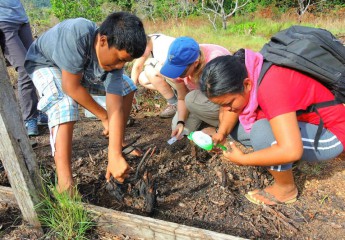
By Andrea Ballinger
People view and value nature in numerous ways. While studying abroad, as a graduate student in the Earth Expeditions 2015 India: Species, Deities & Communities coursework and Global Field Program of Project Dragonfly at Miami University, the value of nature, for the people in the Western Ghats of India, was explored. Using inquiry, participatory education, field and reflection journaling, visits to rural cultural and religious temples and sacred groves, and meeting the people who care for them, a common theme of aesthetics in nature, with trees in particular, resonated in this particular summer experience.
My tree project began on National Arbor Day, April 24, 2015 until the week day of our study abroad in India on August 9. The number 108, signifies the number of pieces, known as pithas (aka bench or locus of worship) that fell to the ground from a goddess’s body, Sati, while Shiva was carrying her around India and mourning her death (Eck, 2012).
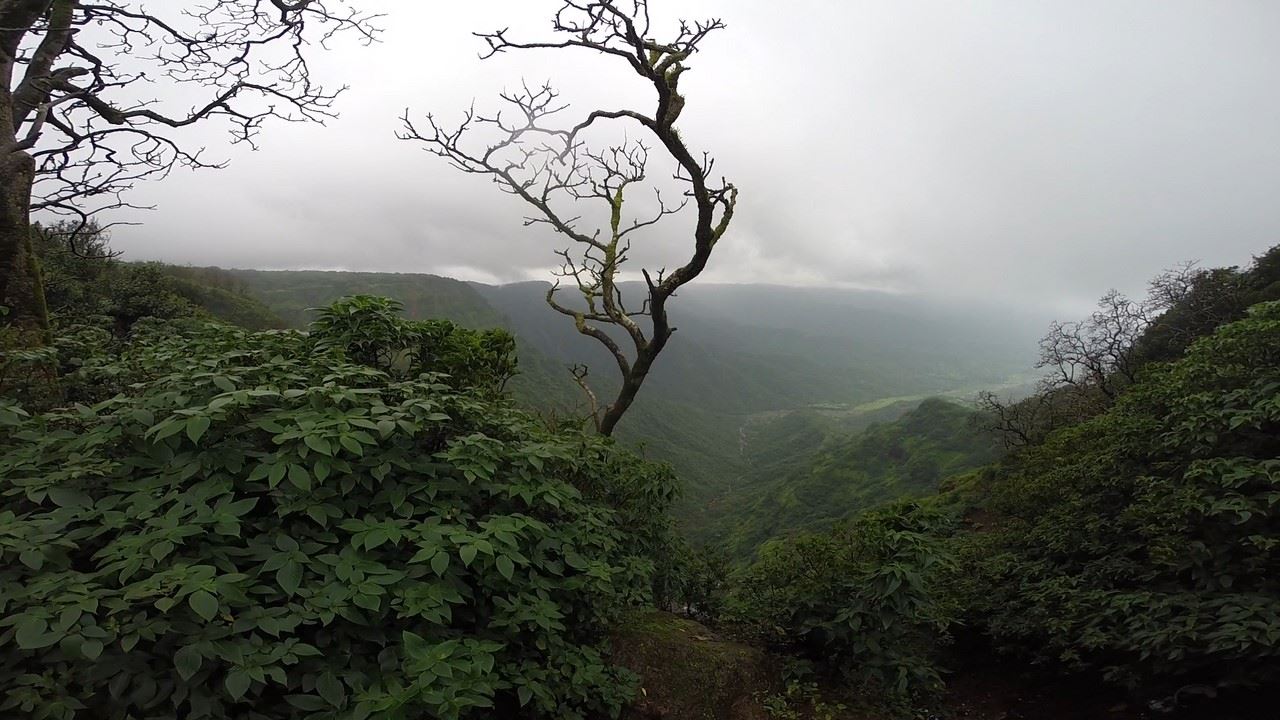
Our first stop, on the way to the sacred grove sites of the Western Ghats of India, we took a chai tea break at a road side cafe. I shared my idea and inquiry action project plan, of journalling on the subject of trees for 108 days, with others at our table. The director and co-founder of Project Dragonfly, Chris Myers, said “Trees? You should talk to Jayant so he can tell you about their tree projects.”
Jayant Sarnaik, himself, of the Applied Environmental Research Foundation (AERF) soon came over to our table. I told him about my tree journal, and he explained the fairwild project and the ripe fruit collection protocol. Fruit is either collected after it falls ripe to the ground or into nets with the help of gravity (AERF, n.d.). Visiting the sites and knowing the villagers or farmers, collect the fruit instead of using heavy operated and gas powered machinery, adds aesthetics to the already aesthetic sacred groves.
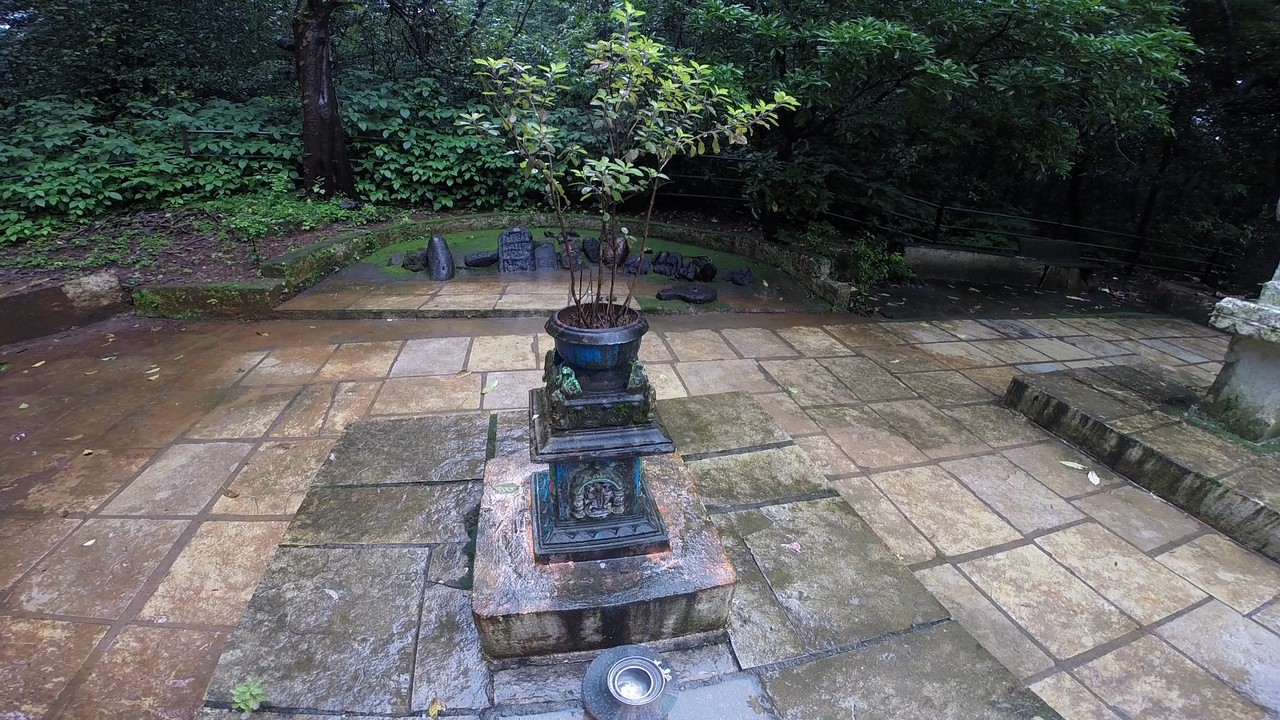
A ficus peepal (aka pipal) tree worship, with a water offering, at a temple and sacred grove, in the Amba Ghat of India.
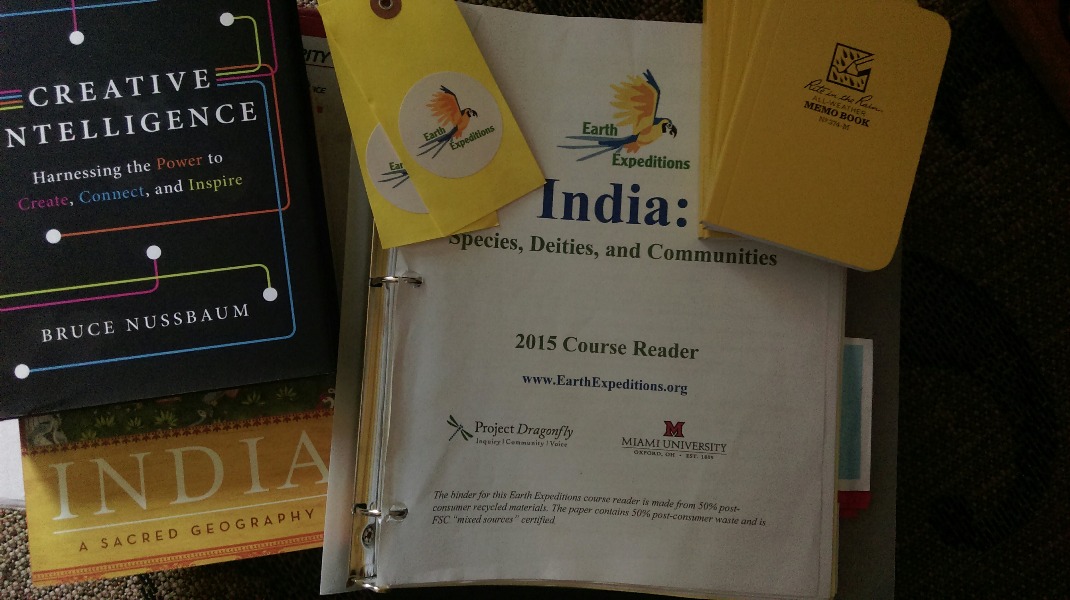
Our in-country course reader offers the scientific literature that supports the concept that aesthetics in nature are valued, as well as cultural and religious significance by both villagers and tourists in regards to trees as a flagship species (Takahashi, Verissimo, MacMillan, & Godbole, 2012).
AERF (n.d.). India. The Bhimashankar strategy – towards a region-wide community conservation programme in the north Western Ghats of India.
Eck, D. (2012). India. A sacred geography. Three Rivers Press. Crown Publishing Group. Random House, New York. (1), 26-27.
Takahashi, Y., Verissimo, D., MacMillan, D.C., & Godbole, A. (2012). Stakeholder perceptions of potential flagship species for the sacred groves of the North Western Ghats, India. Human Dimensions of Wildlife, 17, 257-269.



 nature's heroes